
-
Home

- frontpage
- Details
- Written by Silvia G. Golan

BORACAY — The reopening of Boracay, the Philippines’ top destination, to new market sources signals the safe and gradual revival of the country’s tourism industry amid the pandemic, Tourism Secretary Bernadette Romulo-Puyat said Thursday (Oct. 1).
She said the island’s reopening “is a crucial first step” to domestic tourism recovery, providing the momentum for domestic tourism all over the country. This, she added, gives the country’s tourism industry a glimmer of hope, especially for those counting on tourism to survive.
“What could be a better way to herald the revival of Philippine tourism than the reopening of the world-renowned Boracay Island?” she said.
Puyat noted that there were no reported coronavirus (COVID-19) cases on the island and promised government support in ensuring that health and safety protocols are in place. She stressed that the safety and well-being of tourists and residents remain the top priority of the Department of Tourism (DOT).
She said: “The DOT, the Boracay Inter-Agency Task Force (BIATF) with Department of Environment and Natural Resources (DENR) Secretary Roy Cimatu and Department of Interior and Local Government (DILG) Secretary Eduardo Ano, the province of Aklan and the municipality of Malay have implemented enhanced hygiene and safety protocols in entry points, accommodations and activities. We advise all tourists to be on strict quarantine immediately after the PCR test and until the time of travel to the island. This is to help ensure that they will remain free of COVID-19 before they visit Boracay.”
After accepting visitors from Western Visayas in June, the Boracay Inter-Agency Task Force has now allowed visitors from other regions under a general community quarantine (GCQ) classification to enter Boracay.

In a press conference Thursday, Puyat reiterated that while the age restriction has been relaxed to allow travelers below 21 and above 60 years old, only those without underlying medical conditions and those with negative RT-PCR results will be allowed to enter the island through the Godofredo P. Ramos Airport in Caticlan. The test should be taken at least 48 hours before travel to the island.
A confirmed booking in a DOT-accredited accommodation establishment, air tickets, and the negative test results should be submitted online, through http://aklan.gov.ph, for the approval of the Aklan provincial government. Each visitor who is cleared to travel to the island will then be issued a unique personal QR code for monitoring.
The tourism chief added that while health and safety protocols have been put in place, the success of Boracay reopening will largely depend on one important factor: the compliance and cooperation of the island’s guests. “We urge our visitors to be responsible tourists. Follow the guidelines, respect the rules. We can never be too complacent, even on vacation, we must adhere to the minimum health protocols. Let’s wear our mask when possible,” said Puyat.
Meanwhile, DOT- accredited hotels will each have a designated health and safety officer who will call the Boracay COVID Hotline number 152 should any of the guests exhibit symptoms of the virus. The data from the QR code system will be used to identify the close contacts, should a guest test positive for the coronavirus while on the island.
The DOT facilitated the turnover of essential medical equipment to ensure the readiness of the destination in handling COVID-related concerns. Among these were the donations from the Makati Medical Center group, which included training for the local medical staff at the Ciriaco S. Tirol Hospital and Boracay Clinic. In addition to this, the Filinvest City Foundation, in partnership with Crimson Hotel Boracay’s RT-PCR machine donations, were turned over to the Covid-19 Laboratory being completed at the Dr. Rafael Tumbokon Memorial Hospital in Kalibo.
Pictures Courtesy: PDOT.
- Details
- Written by Silvia G. Golan
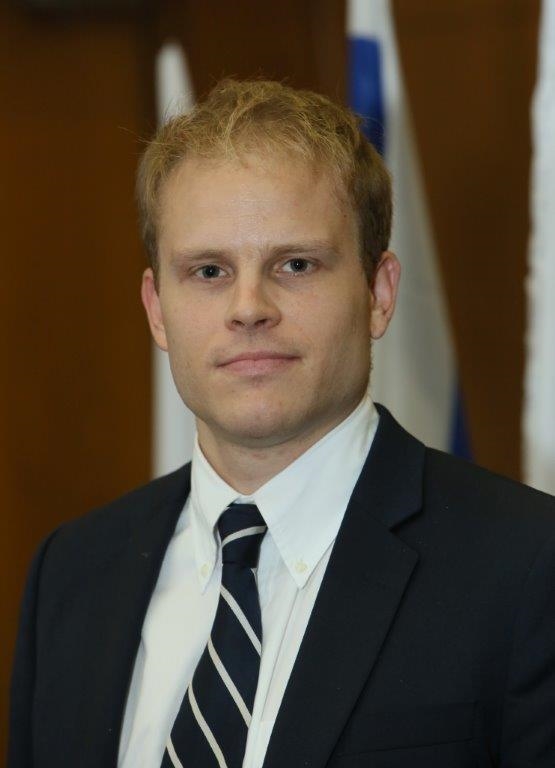
In anticipation of the convening of the 38th World Zionist Congress, which will convene for the first time virtually from October 20 to 22, 2020, with the participation of Prime Minister, Benjamin Netanyahu and the President, Reuven Rivlin, a cooperation agreement has recently been signed between representatives of the "World Confederation of General Zionists" and the "Hanoar Hazioni - Zionist Youth Liberal Center Movement"
Representatives of the "Confederation of General Zionists" faction at the World Zionist Congress have recently signed a cooperation agreement with Hanoar Hazioni "Liberal Center for Zionist Youth" movement. The agreement helps strengthen the two centrist and general Zionist blocs by creating a total of 35 delegates ahead of the convening of the World Zionist Congress in October in Jerusalem. The Congress will be held this year virtually for the first time since its inception in 1897 by Theodor Herzl.
The World Zionist Congress is the only elected democratic body that represents Jews around the world and serves as the supreme institution for legislation and decision-making of the World Zionist Organization. The Congress outlines the policies and platforms of the World Zionist Organization and elects the leadership of Israel’s major national institutions, including Keren Kayemet, Keren Hayesod, the Jewish Agency, etc. The Zionist political parties in Israel and global Jewish organizations, which include the religious streams in the world, meet once every 5 years to elect the leadership of the world Zionist movement and set an agenda for the movement.
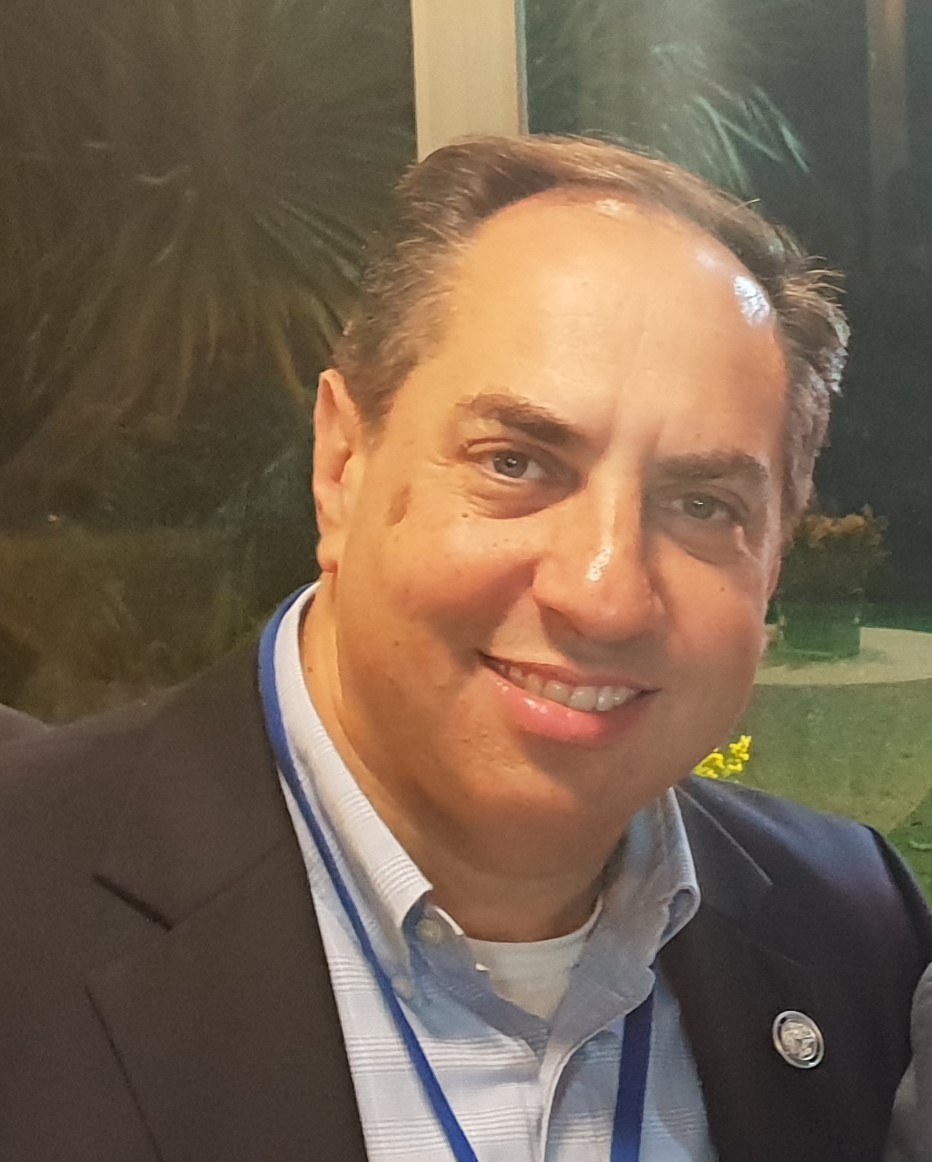
Several of the key figures in the "Confederation of General Zionists" include: Chairman Jesse Sultanik, whose grandfather Kalman Sultanik z”l previously served as Vice President of the World Jewish Congress; Entrepreneur and Philanthropist, David Yaari, Vice Chairman of the Confederation of General Zionists and former MK Dov Lipman.
Yaari, stated that "one of the great challenges of our generation that must be on the Congress’s agenda is how to strengthen the connection between Israel and Diaspora Jewry. As we witness a growing gap within our people, we must ensure Zionism becomes relevant to Jews both in Israel and in the Diaspora and determine how to involve our natural partners in federations around the world in a significantly more meaningful way. I see the cooperation with Hanoar Hazioni (the "Zionist Youth Liberal Center") as natural as we share common values and believe in the critical importance of investing in future generations and empowering today’s youth to become tomorrow’s leaders.”
Sergio Edelstein, a leading member of the Liberal center movement noted that the importance of the cooperation agreement is that the two factions share a common ideological basis and a common value base. According to Edelstein, "the two organizations have common ideological roots born of a desire to create a bridge between Israel and Diaspora Jewry. This current period requires strengthening and extending this bridge".
The "Confederation of General Zionists" is a faction in the World Zionist Congress that deals with Zionism on a macro scale with an emphasis on strengthening the connections and ties between the State of Israel and Diaspora Jewry. The Confederation faction has set its focus and goals to expand the connections between Israel and Diaspora Jewry, and is not affiliated with any party or any religious sect. It puts Zionism at the center and connects with Zionist bodies in the Diaspora who believe in Israel as a the home for the Jewish people. In the run-up to the upcoming congress, the Confederation faction submitted several proposals to the Congress to establish a special committee to combat anti-Semitism, strengthen ties with Diaspora Jewry and more.
The "Zionist Youth Liberal Center" movement is a Zionist alliance in the Zionist arena. The movement has been operating in the Zionist world for 96 years in the field of Jewish education based on the values of Judaism and Zionism. All its members are graduates of Zionist youth. The movement operates among 52 Jewish communities in the Diaspora in 22 countries: from Australia to Canada, the United States, Europe, the continent of South America and Asia. The movement was founded by Zionist youth and focuses on Jewish education. In a platform of liberal humanism, the movement has about 10,000 members throughout the Diaspora, it runs camps and training and brings hundreds of young people to Israel in a variety of programs.
Photo credit Confederation of General Zionists
- Details
- Written by Israel Ministry of Defense
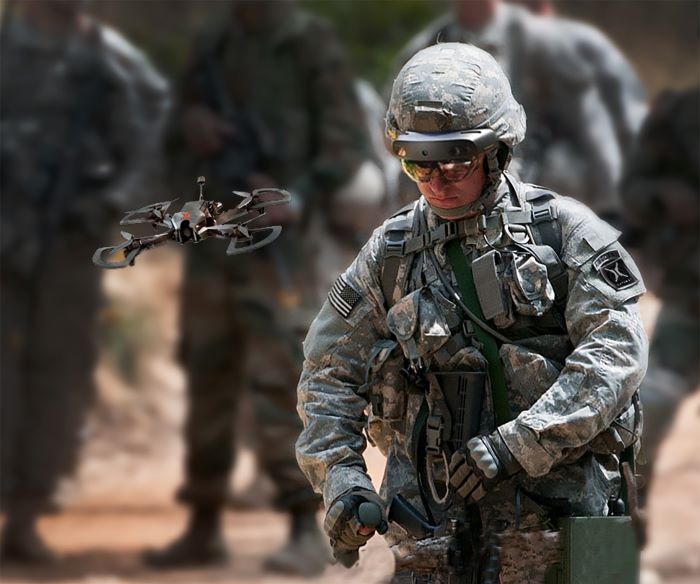
Following a joint R&D program led by the Directorate of Defense Research and Development (DDR&D), in the Israel Ministry of Defense, together with Israeli company Xtend, and the Combating Terrorism Technical Support Office (CTTSO), of the U.S. Department of Defense, an operational pilot program has been launched employing Skylord drones in the defense of U.S. military forces. The program has produced a drone system with a remote immersive interface that protects troops from various inbound aerial threats – particularly drones.
As a result of the close cooperation between the institutions involved, the system has been developed in accordance with concrete operational requirements. As such, following a year of R&D and various tests, the CTTSO decided to launch an operational pilot program, testing and validating the system's capabilities in the field. As part of the pilot program, several dozen Skylord systems will be employed by U.S. troops.
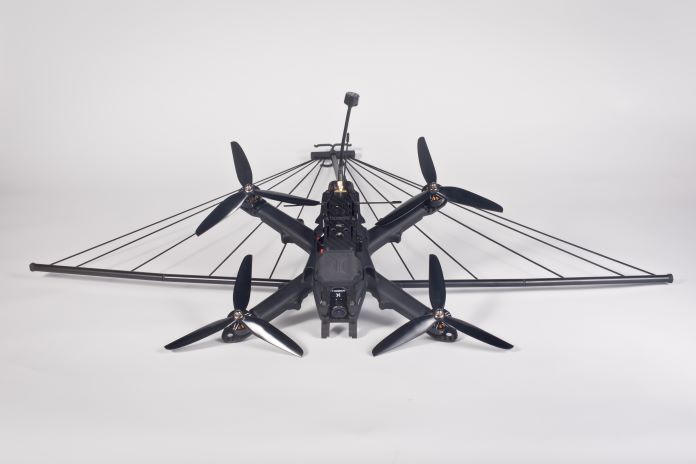
Using an AR device and single handed controller, a military operator may employ the Skylord system to control the drone and perform complex tasks remotely, with great ease and precision. Its interface enables the operator to immersively "step into" a remote reality and engage targets effectively yet safely. With minimal training and no expertise required, troops enjoy a full sensory situation assessment and may utilize C-UAV net payloads in the battlefield. The system's capabilities have been demonstrated in Israel, with confirmed interceptions of incendiary devices flown over the Gaza border by terrorist organizations.
This operational pilot program is the first step towards the widespread deployment of smart systems to U.S. military forces, enabling them to perform complex tasks in the modern battlefield, while minimizing risk. It is also one of the most significant and successful areas of cooperation between the DDR&D and its American partners, highlighting the crucial and extraordinary relations between our respective defense establishments.
Head of the UAV Branch in the DDR&D of the Ministry of Defense, Lt. Col. Menachem Landau: This joint activity implements novel technological capabilities taken from the field of AR (augmented reality), and from the world of gaming. It enables the troops of both nations to employ intuitive, battle-proven and precise systems follow a minimal training period, and to engage hostile flying objects such as drones. We look forward to expanding our collaboration with our partners in the CTTSO of the U.S. Department of Defense, in developing advanced technology to protect troops and enhance operational capabilities."
Xtend CEO, Aviv Shapira: "We have established amazing partnerships in the development, and fielding of this product for the operational end user. The Skylord is one of the world's most advanced C-UAS Hard Kill solution, and the XTEND team is thrilled at the opportunity to deploy our systems in operational missions - and to protect the lives of both US/IDF combat soldiers."
Image Credits: Xtend
- Details
- Written by Prime Minister's Office, the Health Ministry and the Finance Ministry
The Cabinet, last night (Wednesday, 16 September 2020), in a conference call, pursuant to its decision from last Sunday regarding a tightened outline for lowering morbidity from 14:00 tomorrow (Friday, 18 September 2020), approved regulations for dealing with the coronavirus, as well as regulations to limit the number of employees in the public sector. The regulations detail the precise rules that must be adhered to while the outline is in force.
Restrictions on leaving one's residence:
One may go out from one's residence up to a distance of 500 meters only.
This restriction enables going out into the public sphere (including parks and playgrounds) up to 500 meters.
It is also possible to go beyond the 500-meter range and back home for one of the following objectives:
* Employees / soldiers going to their place of work
* Buying medicine, food and essential products and services
* Helping someone in distress or who has some difficulty
* Medical, psychological or complementary medical treatment (with one patient only) and going to social welfare frameworks and essential social care
* Going to the Knesset, a demonstration, a judicial proceeding or to donate blood
* Going out for exercise by one person or people who live together – without restrictions as to distance, provided that one's starting point is one's residence and not a vehicle
* Going to funeral or circumcision
* One conducting prayers (a cantor or shofar blower) who has received a permit from the Religious Services Ministry in order to attend High Holiday prayers
* Essential treatment for animals
* Transferring a minor between parents who do not live together or transferring a minor to the care of another person if a single parent is going out for an essential need
* Going to permitted educational activity (special education, children of essential workers)
* Going to the airport for an overseas flight, 8 hours before the flight
* People with disabilities in sheltered housing or other residential programs may go out to visit first-degree relatives, who may also visit them
* First-degree relatives of fallen soldiers from the Yom Kippur War may go to memorial services
It should be clarified that going to prayers, even according to the outline for the high holidays, is subject to the 500-meter rule.
From Wednesday, 23 September 2020, until Thursday, 1 October 2020, one may leave one's residence in order to purchase the four species, materials for building a sukkah and to do the custom of kapparot.
Restrictions on being in various places
* It is prohibited to be in a residence of another person (except for some permitted purpose, such as carrying out work or assisting someone with a difficulty)
* It is prohibited to be on the beach except for permitted exercise only (by one person or people who live together, who came from their residence and not via a vehicle)
Rules of conduct in the public sphere
* Prohibition of gatherings – up to 10 people in a structure and 20 in an open area
* Maintaining 2 meters' distance between people as much as possible
* Restrictions on the number of passengers in a vehicle – up to 3 people (except for people who live together) and 1 additional passenger per additional backseat row
Restrictions on commercial and recreational activity
It is prohibited to open businesses and places open to the public (including commerce, restaurants, swimming pools, gyms, barbershops, beauty parlors, places of recreation and hotels) as well as reception hours at places of work. There is no restriction on employees entering places of work provided that said place of work is not open to the public (for example, to carry out maintenance work, arrange merchandise, etc.)
Exceptions:
* Essential stores: Food stores, opticians, pharmacies, hygiene products, home maintenance products, laundries, communications products and repair shops for communications devices and computers
* Reception in essential places of work for essential services that cannot be obtained remotely (post offices, banks, etc.)
* Hotels and guesthouses – When the same are serving as alternate residences (long- or short-term) for people renting the place (such foreign workers, etc.) – without use of public spaces, pools, etc. This exception includes hotels for people in quarantine or those hotels designated for use by people receiving treatment and their families, adjacent to a medical institution
* A place for professional athletic training which has been approved by the Culture and Sports Ministry Director General
It should be clarified that it is permitted to operate food stores and essential stores (as detailed above) only, in malls or open-air markets.
Outline for prayers on Rosh Hashanah and Yom Kippur
It is permitted to go to a place in the public sphere where prayers are being held provided that it is no more than 500 meters from one's residence.
In open areas – In regular groups of up to 20 people, with distance between the groups and physical demarcation, empty places between people who do not live together , and no serving of food.
In structures – Areas with regular groups of 10/25 people (depending on the area being orange or red), with plastic between the areas, the maintaining of distance between the areas, the posting of signs regarding the number of worshippers, the size of the place, the applicable rules, two chairs' distance between worshippers and no serving of food.
Permitted capacity for prayers in structures during the high holidays:
* Red areas – 30 people for the first two entrances, 20 people for each additional entrance
* Orange areas – 50 people per entrance
In any case, the number of worshippers present shall not exceed 1 person per 4 square meters of space in places designated for prayer
Public transportation
* City buses on regular routes – 32 passengers
* Inter-city buses on regular routes – 30 passengers
* Accordion buses on regular routes – 50 passengers
* Minibuses – 50% of the number given in the license
* The Carmelit – 50% of spaces
* Chartered buses – 30 passengers
* All other ground vehicles – 50% of the number given in the license
* Taxis – The driver and either 1 or 2 passengers, if one of the passengers is someone who needs an escort, except for people who live together.
Special directives for passengers:
* Passengers in ground transportation vehicles may not eat while they are in the vehicle unless it necessary to maintain health
* Passengers in public transportation will pay for the ride by validating their ticket themselves and not by purchasing tickets from the driver; however, senior citizens, people accompanying the blind and passengers on bulletproof buses in Judea and Samaria will be able to purchase tickets from the driver
* Those operating ground transportation vehicles shall employ ushers to assist in maintaining these rules. The ushers shall were clothing that identifies the operating company and which is distinguishable from police uniforms and will wear prominent name tags that also identify them as ushers
* On buses: Passengers shall not sit in the seats immediately behind or next to the driver unless there is a barrier at least 180 centimeters in height between the driver's seat and the seats behind him. If these seats are reserved for people with disabilities, other nearby seats shall be allocated, which provide easy access.
* Passengers may not stand on inter-city buses
* Passengers may not stand near the driver on city buses on regular routes
* Taxis: Passengers shall not sit next to the driver unless there is a plastic barrier between the driver's seat and the adjacent passenger seat.
* In all transportation vehicles with windows that can be opened, the windows shall be opened.
* Trains: An entry pass for the trip which was ordered in advance together with the ticket. The entry pass will include the passenger's identification number, boarding station, destination station, and the date and time of the trip. Israel Railways will keep in a secure manner the information it receives pursuant to this regulation, will make no other use of it other than to print entry passes and to deliver to the Health Ministry in order to carry out epidemiological tracing and will delete it 20 days after receiving it.
The Cabinet also passed regulations restricting the number of employees in the public sector.
The regulations specify that the number of employees in government offices, local authorities and religious councils shall not exceed 10 workers or 50% of the workforce at any one time, whichever is highest.
Activity in the private sector that does not receive the public shall continue as usual, as per the 'purple badge standard' restrictions.
The Cabinet approved regulations designed to restrict the number of employees in government offices, local authorities and religious councils due to the outbreak of the coronavirus. As of 14:00 tomorrow (Friday, 18 September 2020), the public sector will shift to an emergency footing that will allow the provision of essential services to the public but will reduce personnel at workplaces to around 50%. The other employees will, as much as possible, work from home or under such employment conditions as have been agreed upon by the relevant Finance Ministry officials and the Histadrut.
In order to ensure essential activity at agencies and maintaining the provision of essential services to the public, the Civil Service Commissioner, the Interior Ministry Director General and the Religious Services Ministry Director General will be able to order an increase in the quota of employees who are permitted to be in a workplace – in which the presence of employees is required – at any one time.
This restriction does not apply to the private sector, which will continue to operate according to the 'purple badge standard' as long as no more than 10 people shall be present at meetings held at the workplace.
- Details
- Written by Silvia G. Golan
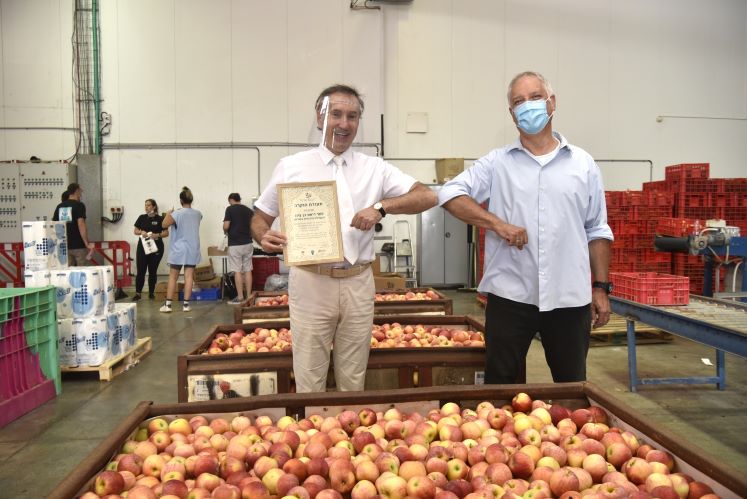
In the wake of the COVID-19 pandemic and the economic crisis followed, the Jewish community of Oporto in Portugal donated EUR15,000 to the largest food bank in Israel, "Leket Israel"
In the wake of the COVID-19 pandemic and the economic crisis followed, the Jewish community of Oporto in Portugal donated EUR15,000 to the largest food bank in Israel, "Leket Israel", which handles food pickup and distribution and feeds hundreds of thousands of people who rely on the organization throughout Israel. The contribution was granted today by the president of the Jewish community of Oporto, Dias Ben Zion, to Gidi Kroch, CEO of Leket Israel.
The donation is a result of ongoing collaboration between the Catholic and Jewish communities in Oporto, which released the movie The Light of Judah three months ago via streaming platforms. The movie portrays the historical relationship between Catholics and Jews in the middle ages. The two communities decided that all Israeli streaming proceeds would be granted to "Leket Israel" and that proceeds from streaming in Portugal, which also totaled at EUR15,000, would be granted to the food bank in Oporto and three local Catholic charity organizations.
Production of the movie was made possible by ongoing religious, cultural and social collaboration between the Catholic and Jewish communities, which began in December 2019 with the goal of fighting antisemitism. The initiative has received financial backing from philanthropic Jewish families as well as B'nai B'rith International.
Dias Ben Zion, President of the Jewish Community of Oporto: "Our community is committed to the State of Israel, and we are excited that we have been able to fulfill our promise and donate the proceeding from the movie, especially after the Covid-19 pandemic has led to a significant increase in the demand for meals. Leket Israel is leading an important mission and we are proud to be able to help”.
Gidi Kroch, CEO of Leket Israel: "Leket Israel is truly grateful to receive support from Portugal of the Jewish community of Oporto and the Diocese of Oporto. It is heartwarming to see Oporto’s Jewish and Catholic communities working together to feed Israel’s poor at this troubled time for us all. We look forward to strengthening the bond between our communities and are honored that Mr. Dias Ben Zion, President of Comunidade Israelita Do Porto will be visiting with us to make the donation and see our activities firsthand."
Photo From left to right: Dias Ben Zion, President of the Jewish Community of Oporto and Gidi Kroch, CEO of Leket Israel.
Courtesy: Yossi Zeliger.


