

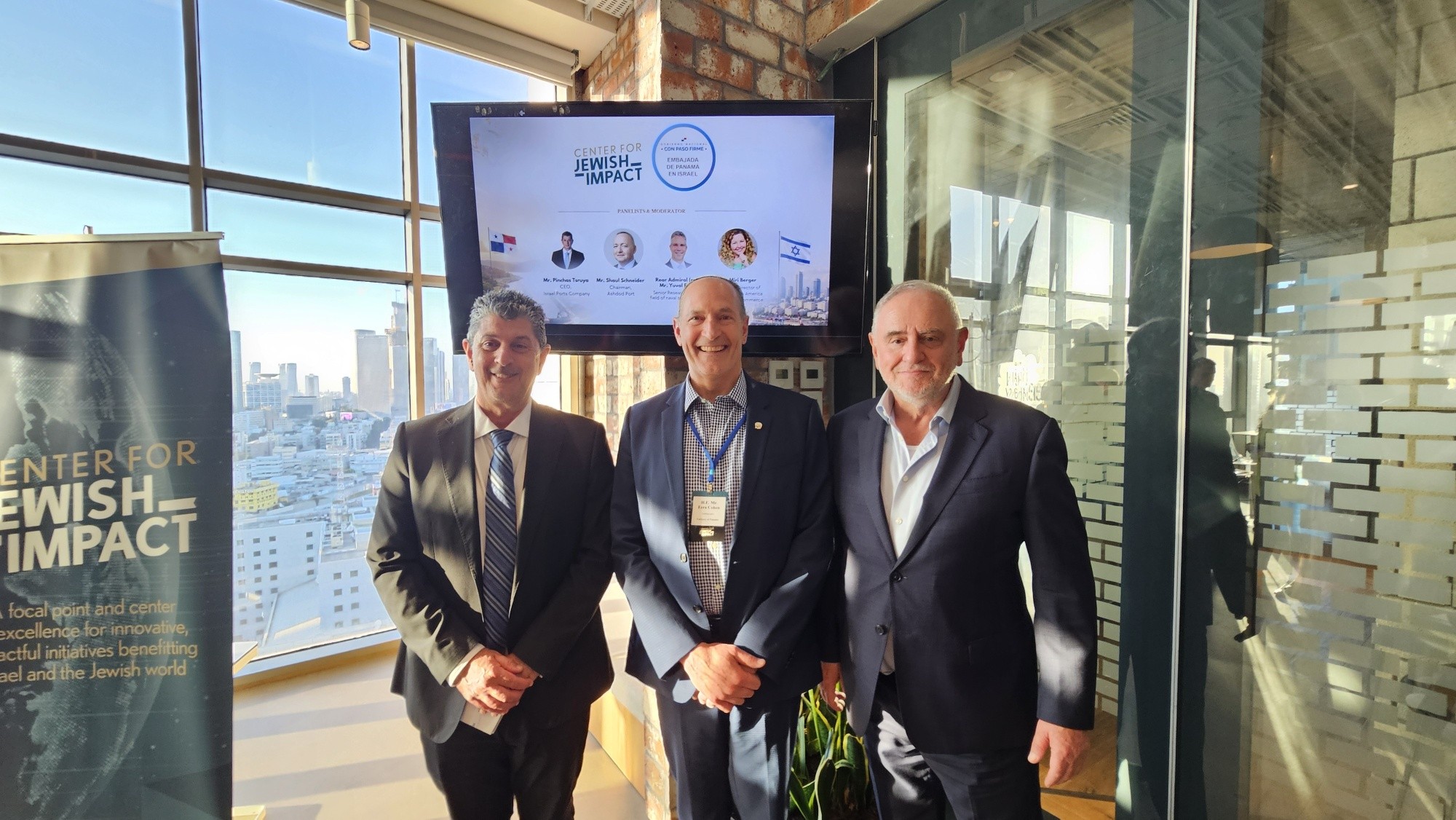
Center for Jewish Impact and Embassy of Panama in Israel host diplomatic salon on strategic connectors in a fragmenting world.
The Center for Jewish Impact held a diplomatic salon event in conjunction with the Embassy of Panama on Tuesday June 9th at the Brain Embassy hub in Tel Aviv. The event, highlighting the importance of global connectivity, communications, and maritime trade resilience, was titled “Strategic Connectors in a Fragmenting World: How Panama and Israel Navigate Global Trade, Resilience and Responsibility.”
The event was opened by Mr. Robert Singer, Chairman of the Center for Jewish Impact, who noted that during periods of global pressure, connections becoming increasingly important, and comparatively small countries who can serve as bridges between markets and nations take on larger roles.
H.E. Mr. Ezra Cohen, Ambassador of Panama to Israel, remarked on the strong ties between Israel and Panama, including last month’s visit by Israeli President Herzog to Panama City. Ambassador Cohen noted that Israeli entrepreneurship and economic resilience is built on a blueprint of finding ingenious solutions to challenges, and then finding ways to market those solutions to global customers. Providing an introduction to the key role of Panama in global shipping, the ambassador noted that 5-6% of global maritime trade comes through the Panama Canal each year, connecting over 170 nations. The ambassador noted the importance of the “Colon Free Zone”, with tariff free shipping, as well as Panama’s ability to incorporate technological and infrastructure adaptations to ensure continued growth and meet the evolving needs of suppliers and consumers.
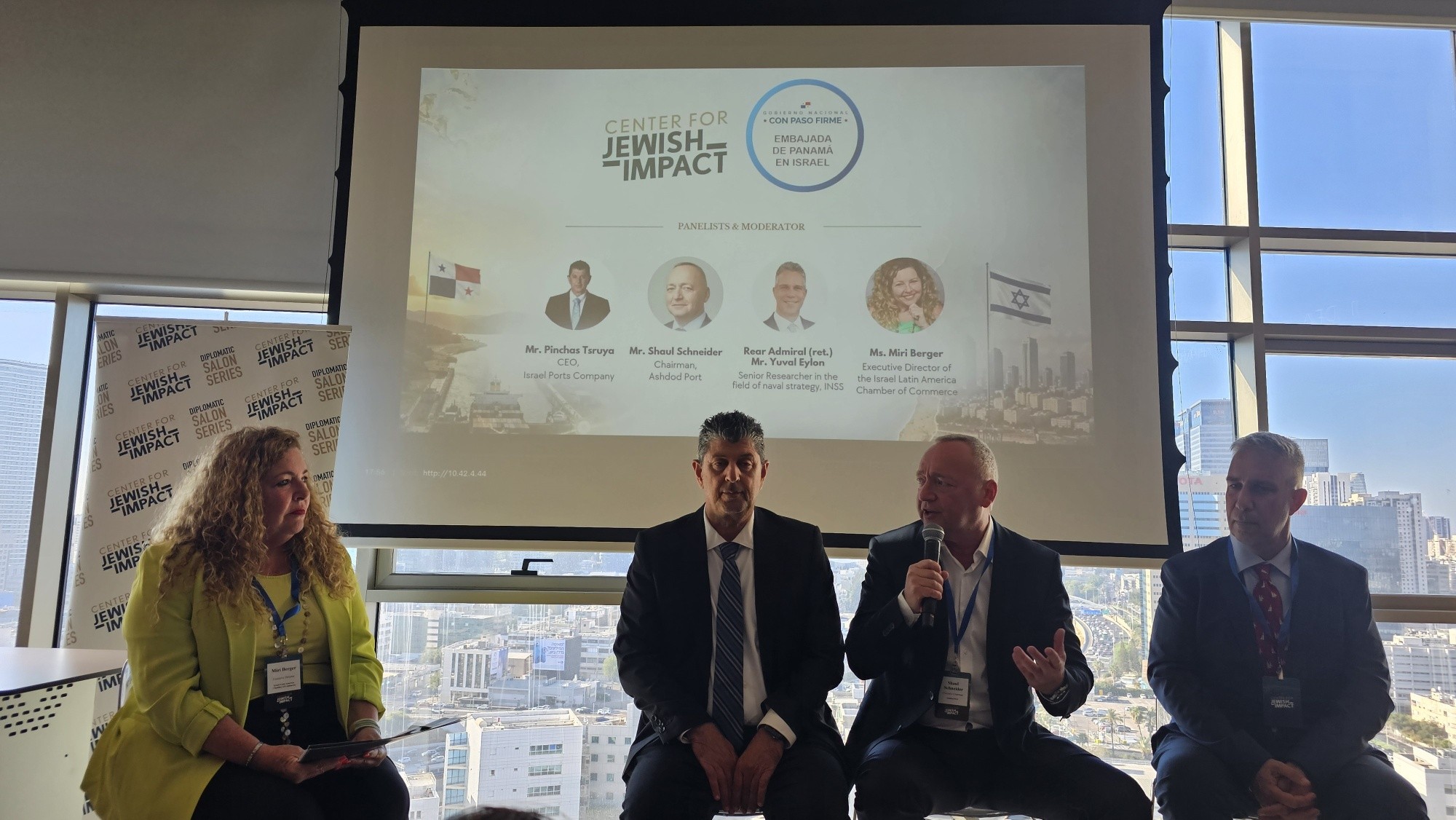
After the opening remarks, Ms. Miri Berger, Executive Director of the Israeli-Latin American Chamber of Commerce welcomed three panelists to the stage for a roundtable discussion centered around the theme of the future of maritime trade in an uncertain global climate. The panelists: Mr. Pinchas Tsruya, CEO of the Israel Ports Company; Mr. Shaul Schneider, Chairman of the Ashdod Port, and Rear Admiral (ret.) Mr. Yuval Eylon, senior researcher at the INSS think tank, brought collectively decades of experience in private, public, civil and military maritime experience, leading to a rich and engaging discussion.
Ms. Berger set the stage for the panelists by framing the underlying question “How do nations navigate uncertainty?” The first speaker, Mr. Tsruya, explained that over 90% of Israel’s goods come via the sea, making maritime trade an irreplaceable core of the Israeli economy. Looking to the future, he discussed the importance of redundancies of ports and ensuring operational continuity, for example Israel’s ability to redirect more traffic to ports in the north or south during times of war. Mr. Schneider added to these remarks by noting that over 80% of global goods are shipped, making a truly worldwide phenomenon. Overseeing Israel’s busiest port, he sees the need for constant adaptation, including configuring piers to fit the growing size of cargo ships, and increasing automation and technology to improve efficiency. Mr. Eylon pointed out that the last few years have seen the dual impact of both global conflict in the Red Sea and Hormuz Strait areas along with climate change, leading to shipping delays and rising costs. He warned of the need to proactively protect both maritime supply chain links and communication, with underwater cables a vital part of global communications.
Looking forward, Mr. Tsruya spoke highly of the IMEC (India–Middle East–Europe Economic Corridor) project to reduce Iranian influence on global trade and provide a land-sea network that would only further increase the importance of Israeli ports. He noted that this would require a significant investment in infrastructure by the Israeli government, with even greater opportunities for prosperity and strategic value. Mr. Schneider raised concerns about foreign government influence and ability to impact Israel’s maritime links via ports owned or managed by foreign-controlled companies, reliance on a crane market dominated by a limited number of foreign suppliers, and cybersecurity in an age of ever-growing dependency on AI-run operations. Mr. Eylon then discussed the importance of innovation in finding solutions, giving as an example the willingness to explore new port venues, such as offshore ports on natural or artificial islands, or building ports deep underwater, where costs can be lowered and the high energy output of AI-systems can be mitigated by natural water cooling systems.
After taking questions from the audience, the panel concluded with a networking session, allowing the diplomats, business leaders and others in attendance to continue sharing ideas and contacts–a central theme of the evening, and a core part of the ethos of the diplomatic salon series.
Steven Aiello Director, Debate for Peace
More pics at Facebook: Israel Diplo / Diplomacy Israel / Silvia G.Golan & Instagram SilviaGolan


