
-
Home

-
Diplomatic Magazine
- Latest News
- Details
- Written by Spokesperson of the President's Office
Wednesday, 26 January 2022 / 24 Shevat 5782
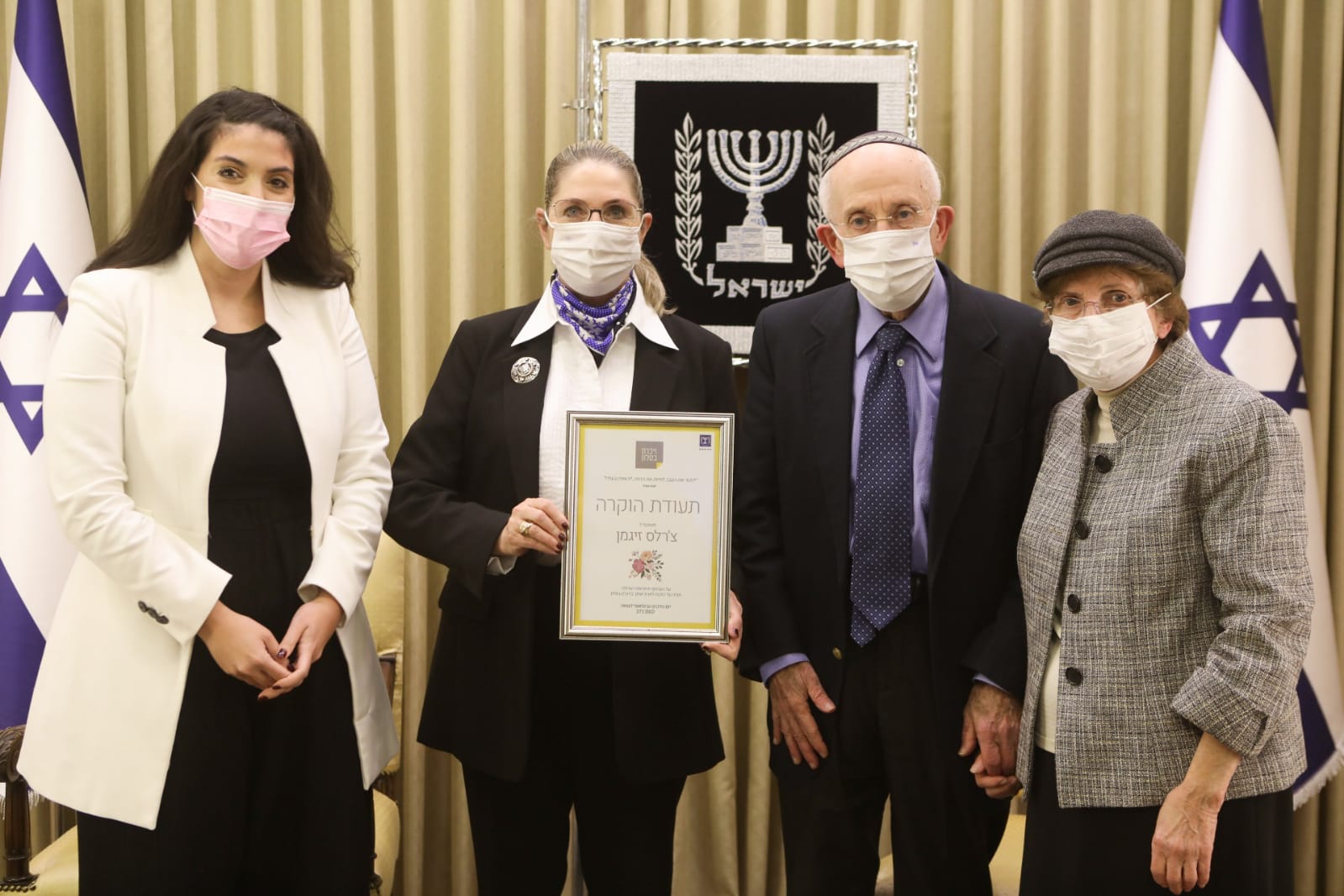
First Lady Michal Herzog: “The fact that we are leading this Zikaron BaSalon event together, with the First Lady of Germany, shows more than anything else that there is hope and that together we can bring a better future.”
In honor of International Holocaust Remembrance Day, First Lady of Israel Michal Herzog and First Lady of Germany Elke Büdenbender hosted Holocaust survivor Charles Siegman this evening for a virtual “Zikaron BaSalon” (Remembrance in the Living Room). Joining the live event broadcast on President Isaac Herzog’s Facebook page were representatives of the Jewish Student Union Germany and Haifa University’s Holocaust Studies program. Also joining the event were Germany’s ambassador in Israel, Dr. Susanne Wasum-Rainer; the wife of Israel’s ambassador in Germany, Ms. Laura Kam; and second-generation Holocaust survivor and activist Leah Schenirer.
Mrs. Herzog opened the event by saying: “The fact that we are leading this Zikaron BaSalon event together, with the First Lady of Germany, shows more than anything else that there is hope and that together we can bring a better future. Such an important initiative puts an emphasis on remembering and not letting the stories of the past be forgotten, but rather keeping the memories alive.”
Mrs. Büdenbender, wife of German President Frank-Walter Steinmeier, joined the event from Berlin and said: “We need to keep up the memory, we need to keep the stories of the Holocaust survivors and the stories of all the victims alive. We must never forget.”
Holocaust survivor Charles Siegman then shared his personal testimony from the Holocaust, accompanied by his wife Gita Siegman. Mr. Siegman was born in the Netherlands in 1935, the youngest of five children. During the war, his parents decided to separate their children to try to protect them. His parents and two eldest brothers were murdered in Auschwitz in 1943. Mr. Siegman and two siblings were deported to Westerbork and then Theresienstadt.
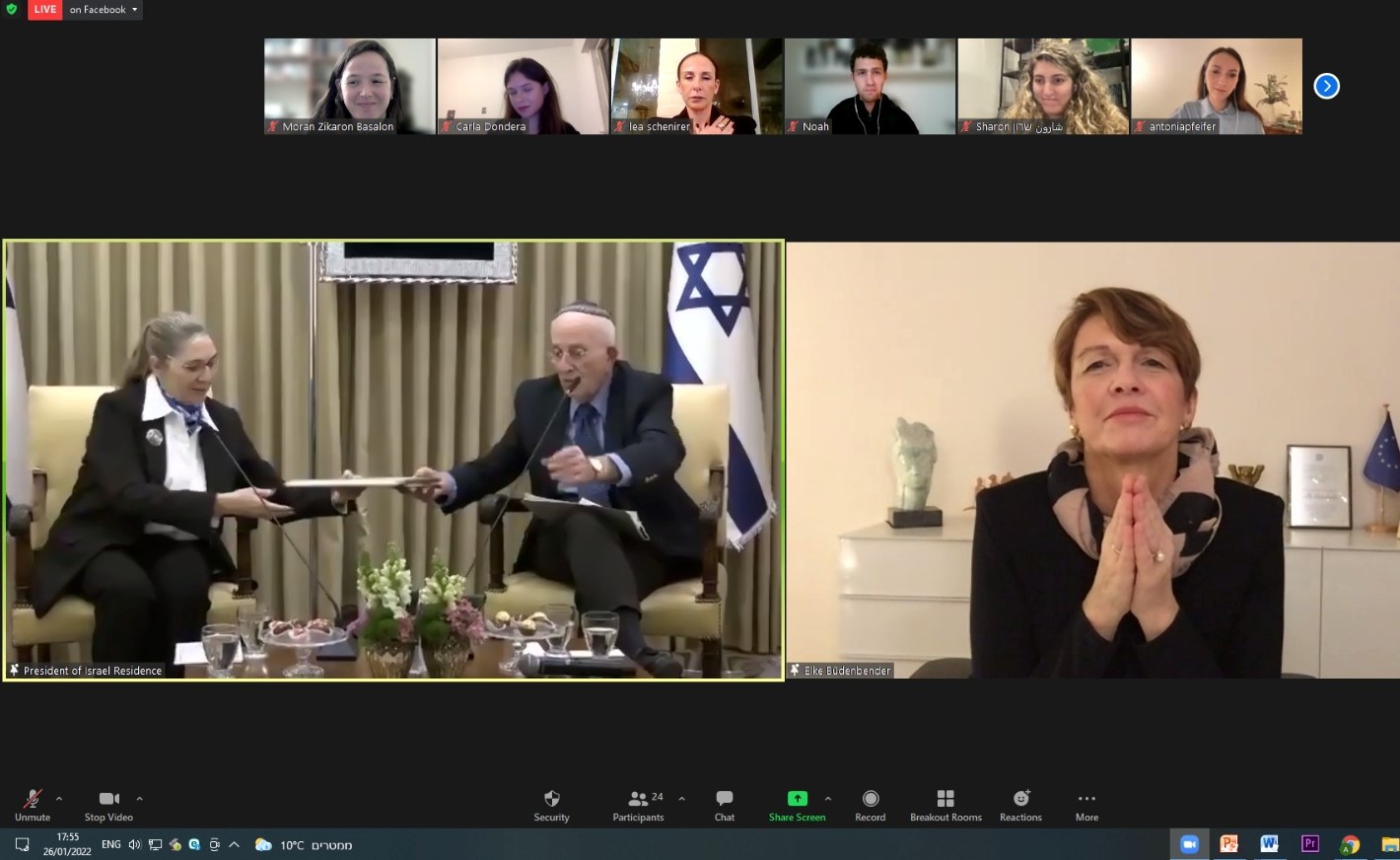
Charles Siegman: “For many survivors, their war experiences presented a challenge to their faith. Where was God? Why did He allow this to happen? But the question should be: Where was civilized man? The Nazis were determined to destroy not only the Jewish people but Judaism itself. Abandoning my faith would have meant giving the Nazis a victory.”
Mr. Siegman added: “It is essential that the world remembers the Holocaust. This is urgent as the survivors will not be with us much longer to bear witness. It is frightening to know that there are people who deny that the Holocaust ever happened. I am witness today. I urge you to take the role of being a witness about the Shoah in the years to come. After the war, antisemites went underground for a while, but now there is a widespread public resurgence of antisemitism, which spills over into anti-Israel propaganda and hate.”
The First Ladies then held an open conversation with Mr. Siegman and opened the discussion up to questions from the students.
“Zikaron BaSalon” is an Israeli tradition of informal, intimate gatherings on Israel’s Holocaust Remembrance Day, Yom HaShoah. The initiative aims to transform discourse from one of survival to one of tikkun olam—the Jewish principle of repairing the world. Over the coming week, hundreds of Zikaron BaSalon events will take place all around the world, including in Bahrain, Britain, China, India, and Germany, where diplomats, students, and young people will hear Holocaust survivors’ testimonies.
Photos: Yuval Cohen Ahronov
- Details
- Written by Silvia G. Golan
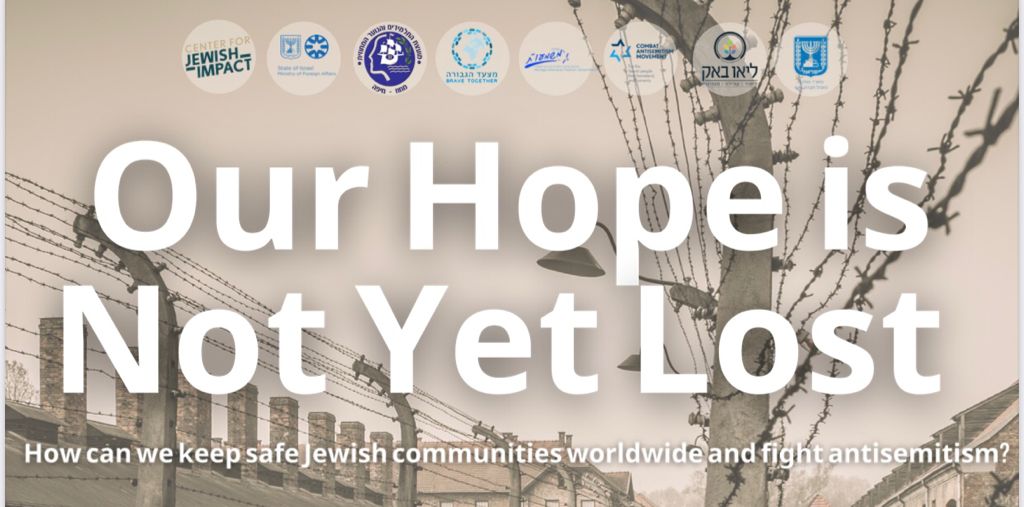
Conference "our hope is not yet lost" sponsored by the Center for Jewish Impact:
Danny Dayan, Chairman of the Yad Vashem: "Our job as a state is to demand that world leaders act immediately, forcefully, and vigorously against any manifestation of antisemitism. We know from historical records the extent to which monstrous antisemitism can develop. "
Irwin Cotler, Canada’s Special Envoy on Preserving Holocaust Remembrance and Combating Antisemitism: "By itself, The State of Israel cannot fight the phenomenon of antisemitism, it must have global partners who will fight alongside her to eradicate antisemitism."
In honor of the International Holocaust Remembrance Day, which will be held at the end of this month, more than a thousand high school students from all across the country and the Haifa region, in particular, gathered today, Monday, for a conference dealing with the "global plague of antisemitism." The conference was simultaneously translated into English, Arabic, and Russian allowing all students across the country to participate.
Danny Dayan, Chairman of the Yad Vashem: "Our job as a state is to demand that world leaders act immediately, forcefully, and vigorously against any manifestation of antisemitism. We know from historical experiences the extent to which monstrous antisemitism can develop. World leaders must take responsibility for antisemitic incidents that occur in their country and act to eradicate them in order to give their Jewish communities the security they deserve.
His remarks were reinforced by the Special Envoy of the Government of Canada for the Preservation of the Holocaust and the Fight Against Anti-Semitism, Prof. Irwin Cotler: "The State of Israel cannot fight the phenomenon of antisemitism By itself. We need to work and build a strong united coalition between all nations in the world so together they can lead a movement that will counter the phenomenon of anti-Semitism, that is spreading daily throughout every region of the world.
Chairman Center for Jewish Impact, Robert Singer added: "Recent polls show a record number of antisemitic incidents against Jews in Britain, with France being the pinnacle of virtual anti-Semitism, 44% of European Jews testifying to having experienced anti-Semitism and one in four Jews in the US have been targeted by antisemitic incidents. Seeing as that the issue of antisemitism is a global problem operating in the public sphere, threatening Jewish communities worldwide, the importance of a conference of young leaders is greater than ever; since the upcoming generation must be involved in the struggle outside of Israel to eradicate this global phenomenon."
Robert Ejnes Executive of CRIF in France noted: "Despite all the publicity on anti-Semitism towards Jews in French society, the Jewish community in France lives well thanks to the work of the vast majority of French political and intellectual forces fighting against anti-Semitism. Thanks to the French legal system there are many laws that fight antisemitism. "
The virtual conference was led by the Center for Jewish Impact, in collaboration with the Ministry of Foreign Affairs, the Ministry of Education - Director of Society and Youth, the Haifa District Student and Youth Council, the Combat Anti-Semitism Movement, Brave Together, and other distinguished partners. The conference hosted a number of distinguished speakers including Dani Dayan Chairman of the Yad Vashem, Special Envoy of the Government of Canada for Holocaust Remembrance and the Fight Against Antisemitism, Prof. Irwin Cotler, Executive of CRIF in France Robert Ejnes, Director of the Department of Anti-Semitism and Holocaust Conservation at the State Department, Ruth Cohen-Dar, Robert Singer, chairman of the Center for Jewish Impact and Sacha Roytman Director of the Combat Anti-Semitism movement, and others.
Haifa District Director of the Ministry of Education, Dr. Saar Harel: "International Holocaust Remembrance Day brings to the agenda the discourse on human rights, children's rights, the fight against racism and antisemitism. The education system is the place where this conversation can be held, and relevance to our everyday actions, and to shape the collective memory that will remain with us throughout the future. "
Haifa District Student and Youth Council Chairman, Omri Afek: "The role of the youth in Israel is to take part and assist in the fight against the phenomenon of anti-Semitism wherever it sows destruction and hatred towards the Jewish community in the world. We see this struggle as the responsibility of all of us, particularly the youth, to lead the struggle and discourse on this issue. "
twitter.com/JewishImpact
- Details
- Written by Silvia
Joint announcement from TAU and IDF Spokesperson
For the 1st time at an Israeli university:
Air and Space Power Center
Ø Tel Aviv University and the Israeli Air Force establish a joint center that will harness the world of civilian research and knowledge to advance various areas related to policymaking and strategic thinking on issues of air and space
On Thursday Dec. 30, Tel Aviv University and the Israeli Air Force launched the Air and Space Power Center at TAU, named the Elrom Center. The new Center, which is the first of its kind in Israel, will harness the world of research and knowledge to advance various areas related to air and space power in Israel.
The ceremony, held at TAU, was led by TAU President Prof. Ariel Porat, in the presence of Air Force Commander Aluf Amikam Norkin.
At the ceremony Prof. Porat and Aluf Norkin signed a joint document emphasizing that "a framework has been formed for multidisciplinary research promoting theoretical and practical knowledge on air and space power, as well as fruitful ties between academia and a range of other sectors, including industry, nonprofits and organizations, government agencies, and Israel's security forces, to develop education and cultivate a cadre of future researchers in this important field."
Video from the Ceremony: https://youtu.be/RxDwtCb52qA
The new Center adds one more layer to TAU's vision of advancing groundbreaking multidisciplinary research that brings together the university's finest researchers, the hi-tech industry, and the community. The Center joins several other multidisciplinary centers established at TAU over the past year, including the Center for Combating Pandemics, the Center for Climate Change Action, the Center for Artificial Intelligence and Data Science, and the Center for Aging.
The center is also an important addition to the vision of the Israeli Air Force – to establish a national research and academic foundation in the field of Air and Space Power, in order to harness scientific knowledge for the benefit of the Air Force, encouraging creative and critical thinking and accelerating the incorporation of innovation into world views of the Air Force.
The new Center will be headed by Prof. Eviatar Matania of the Blavatnik Interdisciplinary Cyber Research Center, formerly founding Head of the Israel National Cyber Bureau and currently Head of the International Cyber Politics & Government Program at TAU. Combining theoretical and applied research, it will operate within the Gordon Faculty of Social Sciences but will also involve researchers from Engineering, Exact Sciences, and Medicine, and serve as a foundation for advancing multidisciplinary research on air and space.
In this context the Center will develop a cadre of future researchers and establish systematic academic activity in this area in Israel. It will encourage students to specialize in air & space power – both students who belong to nonprofits and organizations, government agencies and the security forces, and students looking to develop a career in industry in these important fields.
In the Israeli Air Force, the Air and Space Power Center will support the development of a foundation of academic knowledge. The academic research carried out at the Center can help in the development and adaptation of the Air Force's operational concepts, combat doctrines, and power- building processes. Methodological tools for professional, abstract, and practical thinking developed by the Center's researchers will also be beneficial. In the foreseeable future the Center will serve as a hub for international research collaboration with academic institutions, research institutes and air forces around the world.
TAU President Prof. Ariel Porat: "The field of Air and Space Power is important and promising, both socially and scientifically. Many researchers at TAU address this subject from different angles, and the new Center will contribute a great deal to the advancement and development of both research and education in this area. Tel Aviv University conducts many research collaborations with industry and public organizations, which upgrade our research and make it more relevant. At the newly established Center, many more participants from industry and academia, both in Israel and worldwide, will become involved, advancing Air and Space Power research."
Israeli Air Force Commander, Aluf Amikam Norkin: "Today we are groundbreaking pioneers in a vast range of operational issues which have grown in response to the challenges of our Middle-Eastern neighborhood. Thus, together with the IDF's intelligence operations, air power has become the main answer to the country's security challenges. Fighting terrorism from the air, air supremacy, remotely piloted aircraft, the most advanced air defense in the world, and three F-35 squadrons – are only some of the aspects in which the Israeli Air Force, together with Israel's defense industries, are leaders and pioneers.
Ben Gurion's vision, and his understanding that 'the air is a new kingdom we must conquer', has become a reality. But we must not rest on our laurels. Only in-depth investigation of ongoing operations will keep us sharp and ready. Yet as we look toward the coming decades, we need more than excellent inquiry. We must expand our activities into the academic arena, to include research methods developed in Israeli academia, at Tel Aviv University. We must set in motion both military and civilian research on air and space power, that will open new horizons to which we may aspire.
The establishment of the Air and Space Power Center, bringing together experts from academia and the Air Force, transforms a vision into reality. This is a real need arising from the constantly rising complexity of the battlefield and operational challenges, requiring ever greater and deeper military knowledge – in order to ensure the position of the Israeli Air Force as one of the leading forces in the world."
Image captions:
1- (Left to right): Aluf Amikam Norkin & Prof. Ariel Porat.
2- (Left to right): Prof. Eviatar Matania, Prof. Ariel Porat, Dafna Meitar-Nechmad & Aluf Amikam Norkin.
Photo credit: Israel Hadari.
- Details
- Written by Silvia Golan

This week the first international Israel Data Science Initiative (IDSI) Conference is taking place. Dozens of leading researchers, most of them from academia – professors and graduates from Israel's leading universities - are attending the conference, held in Ein Gedi
The chairman of the conference's organizing committee is the Director of IDSI, Prof. Paul Feigin from the Technion. "The conference will be attended by dozens of Technion lecturers and their colleagues from research universities in Israel, from public institutions and from companies," he said. “The importance of a physical meeting lies in the need to build the data science community to include core researchers and researchers from satellite disciplines. Such a community will promote mutual and interdisciplinary fertilization and lead to the informed and ethical use of data science for the benefit of society and industry.”
In recent years, there has been a leap in data science and artificial intelligence, and these are increasingly affecting all areas of life, including transportation, medicine, and education. It was against this backdrop that the national initiative was created in 2020. Established by the Council for Higher Education, the initiative promotes activity in these fields through collaborations within academia, between academia and industry, and between entities abroad. The international conference marks the first year of the program's activities both nationally and internationally.
The conference deals with a wide range of topics, including computational learning, natural language processing (NLP), statistical learning, bioinformatics, AI and data science in education, computer vision, data science in biology, responsible AI and social good, and the mathematical basis for data sciences. The conference's keynote lecturers are Prof. Yoav Freund and Prof. Trey Ideker from the University of California, San Diego; Prof. Bin Yu from Berkeley, and Prof. Ming Yuan from Columbia University. Alongside the rich professional program, which includes lectures and poster presentations, there will also be social activities, including gala evenings and excursions in and around the Dead Sea and Ein Gedi.
Link to the conference website
- Details
- Written by Technion Spokesperson's Office
During project development, the students had to go through all the stages needed to bring an idea to fruition. Starting with a medical problem which they had to tackle, they had to combine and implement medical know-how with engineering skills and scientific knowledge in order to provide a real-world solution. This hands-on experience exposes and prepares Technion graduates to the high-tech and biomed industries, and to biomedical research in a way that encourages multidisciplinary work. Therefore, such projects are vital for their future career and entrepreneurial skills.
Here’s a glimpse into some of the most intriguing (and often lifesaving) student projects in biomedical engineering.
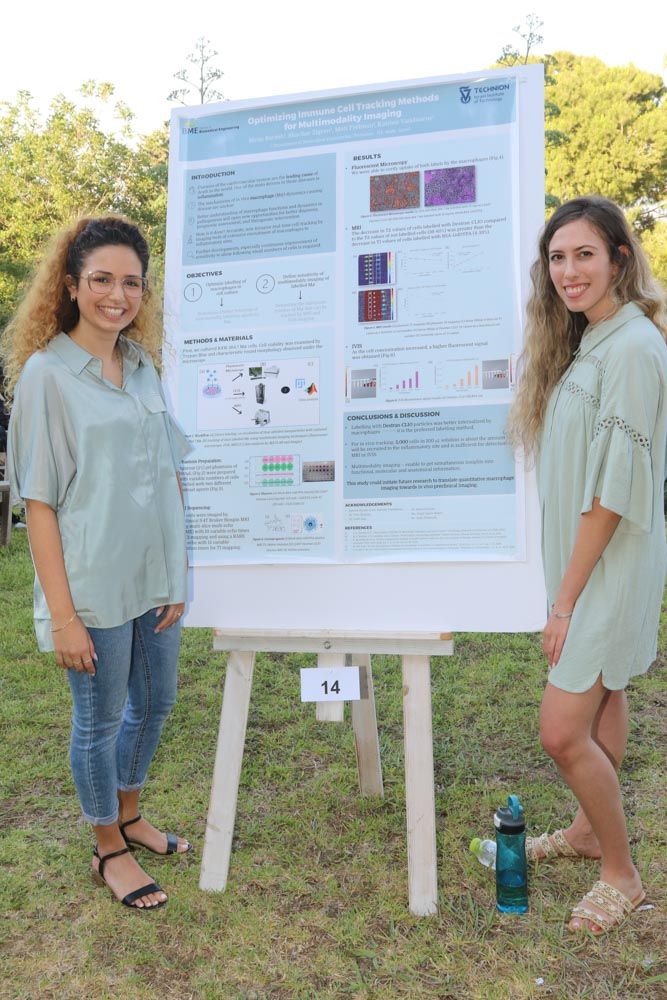
Early detection of cardiovascular disease - Sivan Barash and Shachar Zigron took first place in the student project competition, presenting a novel way of labelling macrophage cells, making them detectable by MRI. Macrophages are cells involved in the detection and destruction of bacteria. Cardiovascular disease is strongly associated in the public mind with fat storage in the body, but recent studies have shown significant involvement of inflammation in the process. Since macrophage cells have a major role in inflammation, being able to observe their movement within the body would facilitate scientists’ exploration of the connection between inflammation and cardiovascular disease. The duo’s project has lain the groundwork for in-vivo studies soon to be conducted in the laboratory of Prof. Katrien Vandoorne.
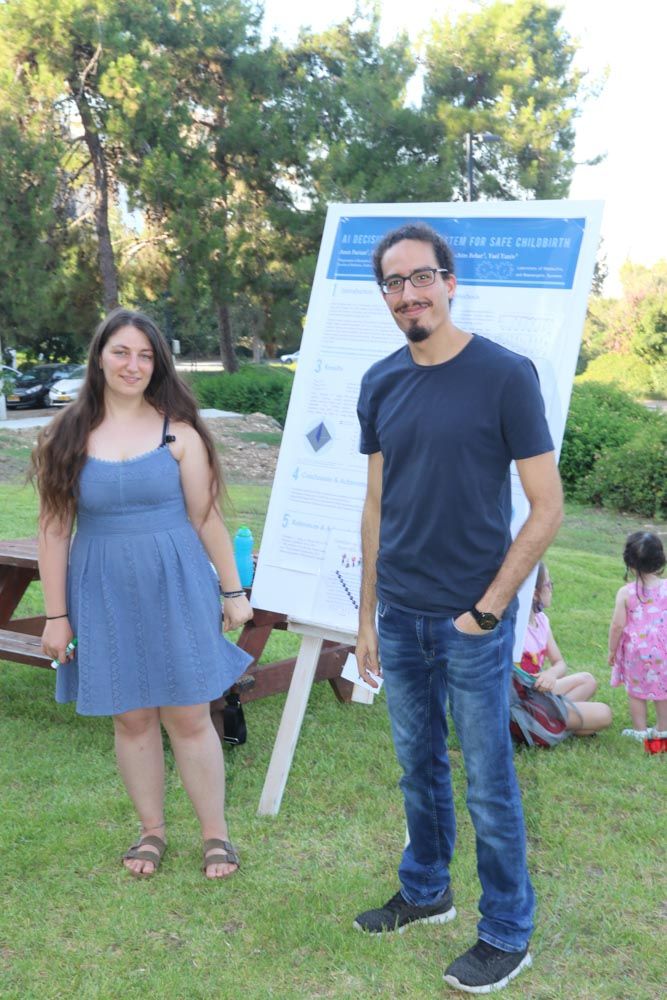
AI-based decision support machine for fetal monitoring - Second place went to Amit Parizat and Rotem Shapira, who created an artificial intelligence (AI) system to analyze the output of the fetal monitor during labor and serve as a decision support machine. Complications during labor develop rapidly and can harm mother and child. The fetal monitor alerts healthcare providers of complications during labor. However, analyzing the monitor’s long signals manually is challenging and leads to obstetrics teams recommending a Caesarean “just in case” at the slightest indication, to the point that currently a third of all births in the U.S. involve a C-section, and only 20% of
C-sections are later found to have been necessary. C-sections carry risks to the mother and involve a long recovery and long-term side effects. Amit and Rotem proved the feasibility of training an AI machine to predict complications during childbirth, preventing unnecessary invasive intervention, while ensuring that intervention is performed when needed. To achieve this, the two worked with the Obstetrics and Newborn Medicine Division at the Carmel Medical Center.
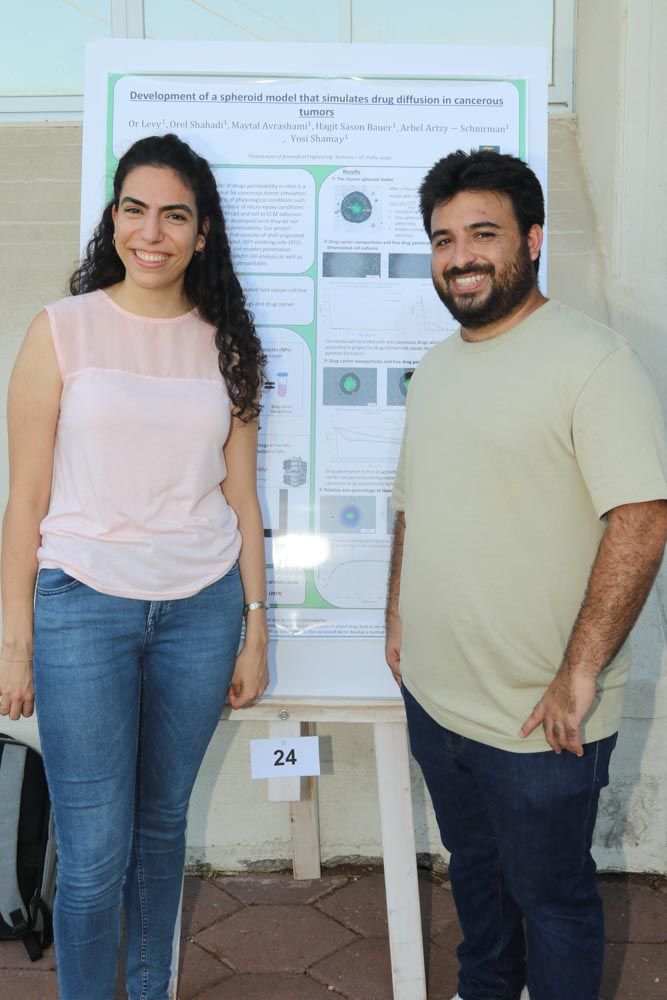
Treating cancer - Orel Shahadi and Or Levy, coming in third, developed a 3D model that simulates drug penetration into solid tumors, facilitating development of new drugs and drug combinations to treat cancer. Their innovative model features an inner cluster of cells engineered to display fluorescence, surrounded by an outer layer of cells. Change in the cells’ fluorescence served as an indicator, providing a way to measure drug penetration into the tumor with a high level of precision.
Detecting heart rhythm problems - Yonathan Belicha and Daniel Cherniavsky, who took fourth place, explored a novel approach to diagnosing cardiac arrhythmias (heart rhythm problems), using nothing more than a few 1-minute videos of the patient – the kind of videos one might make using one’s smartphone. The natural contraction and relaxation of the heart cause minute changes in the human skin color. Yonathan and Daniel extracted those very small changes from the video, and from them – the subject’s pulse. Using this, they trained an AI system to recognize cardiac arrhythmia.
Fighting coronavirus with… ultrasound - Finally, Mor Ventura, Dekel Brav and Omri Magen, coming in fifth, tackled one of the challenges posed by the COVID-19 epidemic. Classification of the COVID-19 severity degree is usually done in hospitals using CT. However, CT machines’ availability is strained, they are expensive, and the process is further complicated by the need to transfer a patient with a highly contagious disease to and from the machine. Mor and Omri explored the possibility of using lung ultrasound instead, obtaining the necessary diagnostic information faster and more easily at the patient’s bedside, also significantly reducing the workload in healthcare facilities. To this end, they first developed an image-processing algorithm to “read” and label lung ultrasounds, identifying areas of interest and ignoring artefacts. Using the results of this algorithm, the trio then trained a neural network to classify the ultrasound videos and identify the severity of the patient’s illness. The project was conducted in collaboration with the Tel Aviv Sourasky Medical Center.
Award-winning FemTech startup - Asaf Licht and Zeinat Awwad presented the entrepreneurship project. Just finishing their bachelor’s degree, the two have already turned their project into a startup called Harmony. Their project is a FemTech initiative, developing a wearable, continuous, and non-invasive tracker to monitor women’s hormonal levels, aiming to ease the process of IVF, but also relevant for avoiding pregnancy, or alternatively for increasing the chances of getting pregnant. Currently, IVF procedures requires a blood test multiple times a week; Harmony seeks to replace that with an at-home device that provides continuous measurements while reducing discomfort. This project won first place in the EuroTech Innovation Day startup competition.
To read about additional student projects recently presented at the Technion, click here
Photos
- First prize Winners Sivan Barash and Shachar Zigron
- Second prize Winners Amit Parizat and Rotem Shapira
- Third prize Winners Orel Shahadi and Or Levy
Photos Doron Shaham-marcus (Technion )


